Signal Quality Matters More Than File Format
A clear voice with consistent volume is easier to recognize than quiet speech under music. An MP3 or WAV format alone doesn't guarantee good results: a poorly placed microphone and heavy compression might have already lost important details.
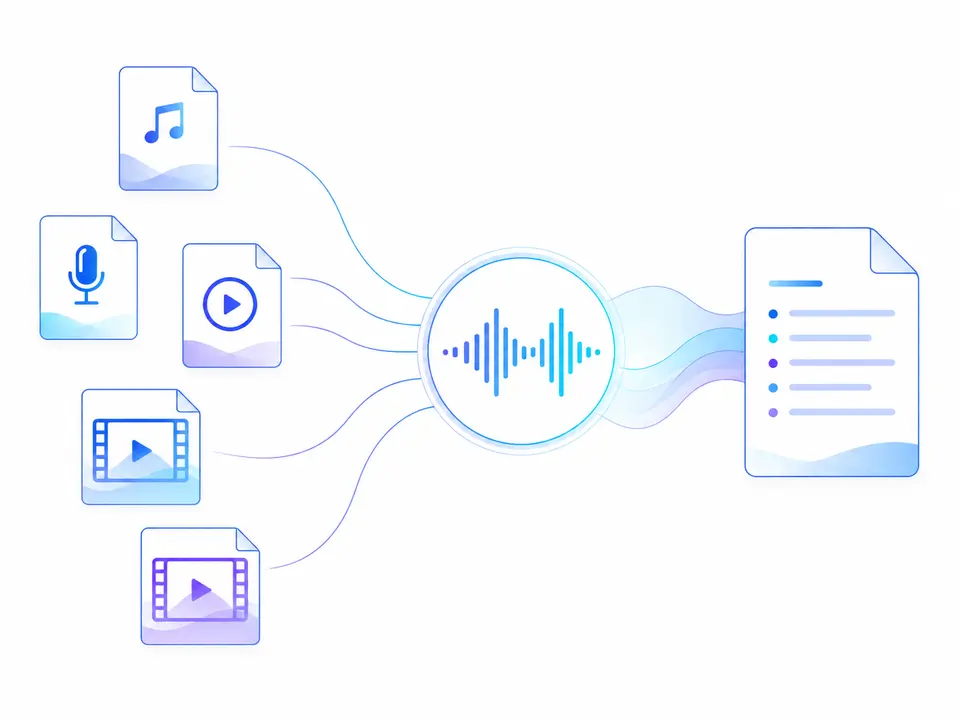
Before uploading, listen to several parts—beginning, middle, and end. If a person has to guess words, it won't be easier for an automated system. Therefore, when choosing an audio or video format for transcription, first assess clarity, then the format.
Noise, Echo, and Simultaneous Speech
Constant background hum obscures consonants, echo overlaps phrases on themselves, and two voices at once compete for a single audio channel. Questions from afar and conversations in large empty spaces are particularly challenging.
Software cleaning can sometimes improve clarity but won't restore information missing from the signal. Keep the original and compare the result after processing. If you're about to make a recording, check in advance how to prepare audio for transcription.
- Microphone and DistanceA close, even voice retains more speech details.
- Background NoiseHum and music mask quiet consonants and endings.
- Room EchoReflected speech overlaps with the next part of the phrase.
- Voice OverlapSimultaneous speech is harder to separate and link correctly.
- Rare WordsNames and terms are easier to confuse with similar familiar phrases.
Diction, Accent, and Special Words
Rare surnames, product names, and industry abbreviations appear less frequently in everyday speech than common words. The algorithm might replace them with a similar common phrase. Accents, fast speech, and swallowed endings add ambiguity.
Create a short glossary of critical terms for editorial review. Even if the service doesn't support a custom dictionary, such a list will speed up proofreading. Pay special attention to:
- names, surnames, brands, and geographic locations;
- numbers, dates, amounts, and units of measurement;
- negations, particles, and short auxiliary words;
- professional terms and abbreviations.
How to Measure Quality Without Self-Deception
Take a fragment similar to future recordings and compare the text with a manually checked version. It's not just about the percentage of words but also the nature of errors. One wrong comma and a mixed-up amount have different implications.
Record how long the review took and which errors are recurring. Such a test helps choose the process: selective proofreading, full editing, or manual transcription of complex sections. A detailed procedure can be transferred to a separate transcription review checklist.
If an error changes a fact, obligation, or decision, it's critical regardless of the overall word match percentage.
Practical Checklist
Test not with a perfect demo recording, but with a short segment from real work. This way, the test will show both the text quality and the expected amount of editorial review needed.
Before Concluding on Accuracy
- Listen to the beginning, middle, and end of the recording.
- Select a complex yet typical segment.
- Mark critical entities separately.
- Don't compare services based on unverified percentages.
- Keep the original for rechecking.
How to Complete the Task in Transkribator
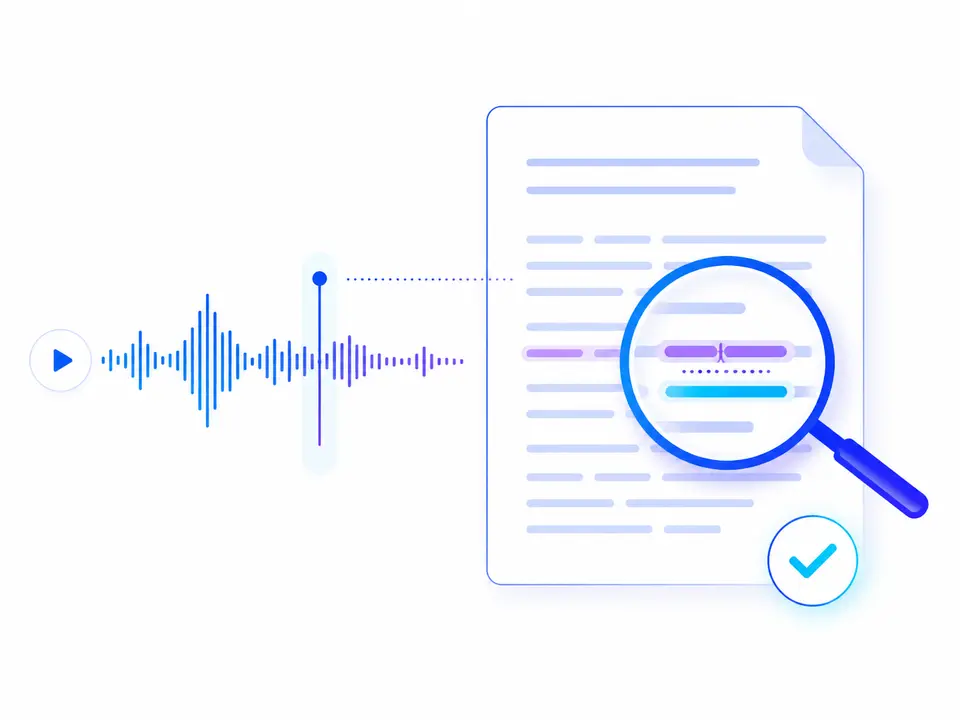
On the "Audio to Text" page, upload the finished recording and wait for the result. First, assess the overall meaning, then check names, numbers, and terms by timestamps. The confirmed export path is to download TXT and continue editing in your usual tool.
- Select a Typical SegmentYou need a regular work recording, not a perfect example.
- Get the TextEvaluate the overall meaning and recurring errors.
- Check by TimestampsVerify names, numbers, negations, and terms.
- Download TXTContinue editing and record the time spent.
Main Points
- Accuracy is a property of a specific recording, not an abstract service.
- Noise, echo, and overlapping voices particularly hinder recognition.
- Names, numbers, negations, and terms require separate verification.
- A useful test measures both the nature of errors and editing time.
Frequently Asked Questions
Which format provides the best accuracy?
The quality of the original recording is more important than a single extension. Uncompressed audio can preserve more details, but it won't fix a bad microphone.
Can noise be removed before recognition?
Sometimes yes, but aggressive filtering can damage speech. Keep the original and compare it with the processed version.
Why are names recognized worse?
They occur less frequently and often have multiple spelling variations. Therefore, a name that looks plausible still needs to be checked against the source manually.
Do I need to check the entire text?
The depth depends on the cost of an error. For publications, decisions, and agreements, the check should be more thorough than for a personal note.