Benefits of Manual Transcription
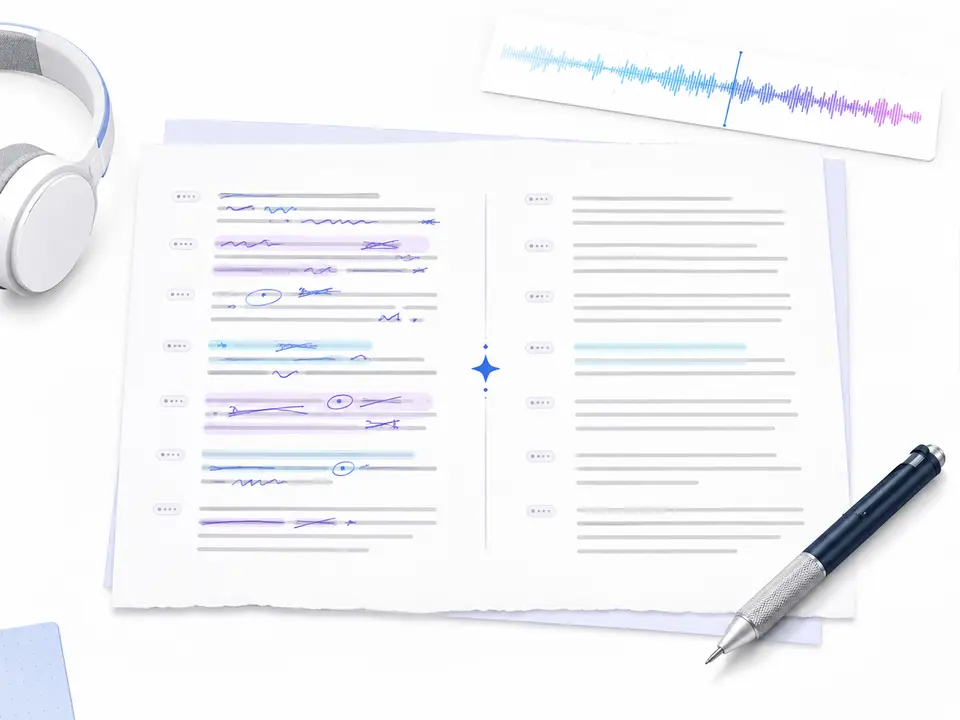
A human can consider context, recognize specialized vocabulary, and consciously mark unclear parts. They can also immediately bring the conversation to editorial standards: remove repetitions, format dialogue, and preserve important nuances.
The downside is the high amount of manual work involved. The speed depends on the quality of the recording, the skill of the transcriber, and the required level of accuracy. Even an experienced editor must revisit contentious parts. If you're not sure where to start, it's helpful to first understand what transcription is and what the final text can look like.
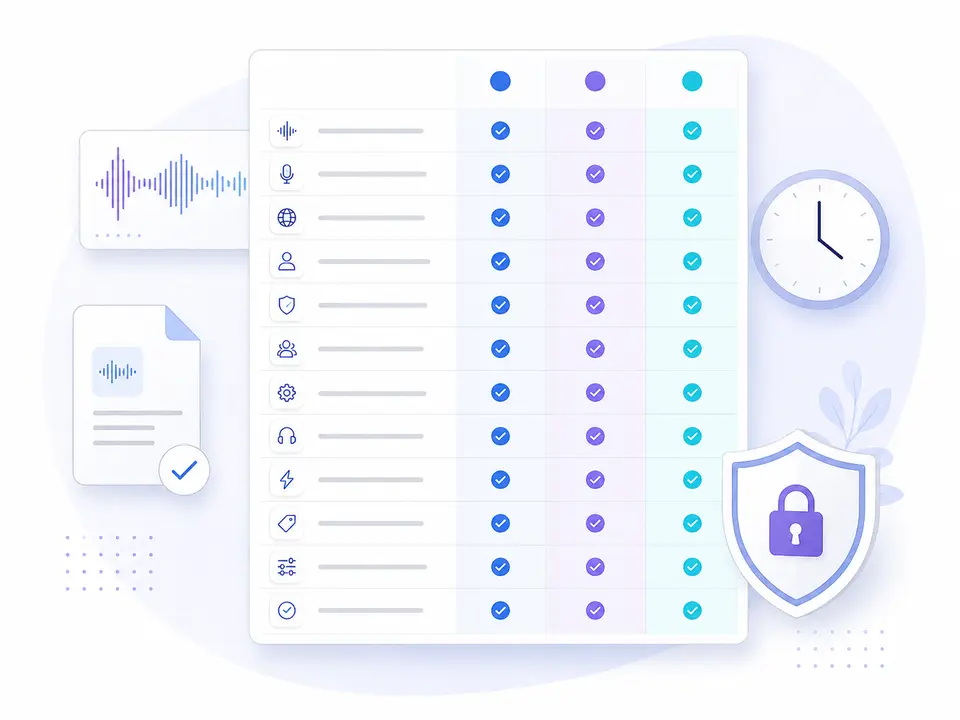
Decision Matrix for Different Tasks
For personal notes, a draft with selective checking is acceptable. For publishing interviews, editorial proofreading and quote verification are necessary. For legal, medical, and financial documents, automatic text can only serve as supplementary material: the decision and responsibility remain with the specialist.
Confidentiality is a separate criterion. Before handing over the recording to a transcriber or service, check the grounds for processing, the organization's internal rules, and the current personal data processing policy.
| Task | Working Basis | Control | What to Check |
|---|---|---|---|
| Lecture or Webinar | Automatic Draft | Selective | Terms, definitions, and key examples |
| Interview for Publication | Automatic Text and Editing | Full for Quotes | Formulations, Names, Facts, and Slips |
| Meeting | Automatic Draft | Critical Points | Decisions, Deadlines, Responsibilities, and Denials |
| High-Risk Material | Work Under Specialist Supervision | Strict | Every Significant Statement by Source |
Hybrid Process Without Extra Work
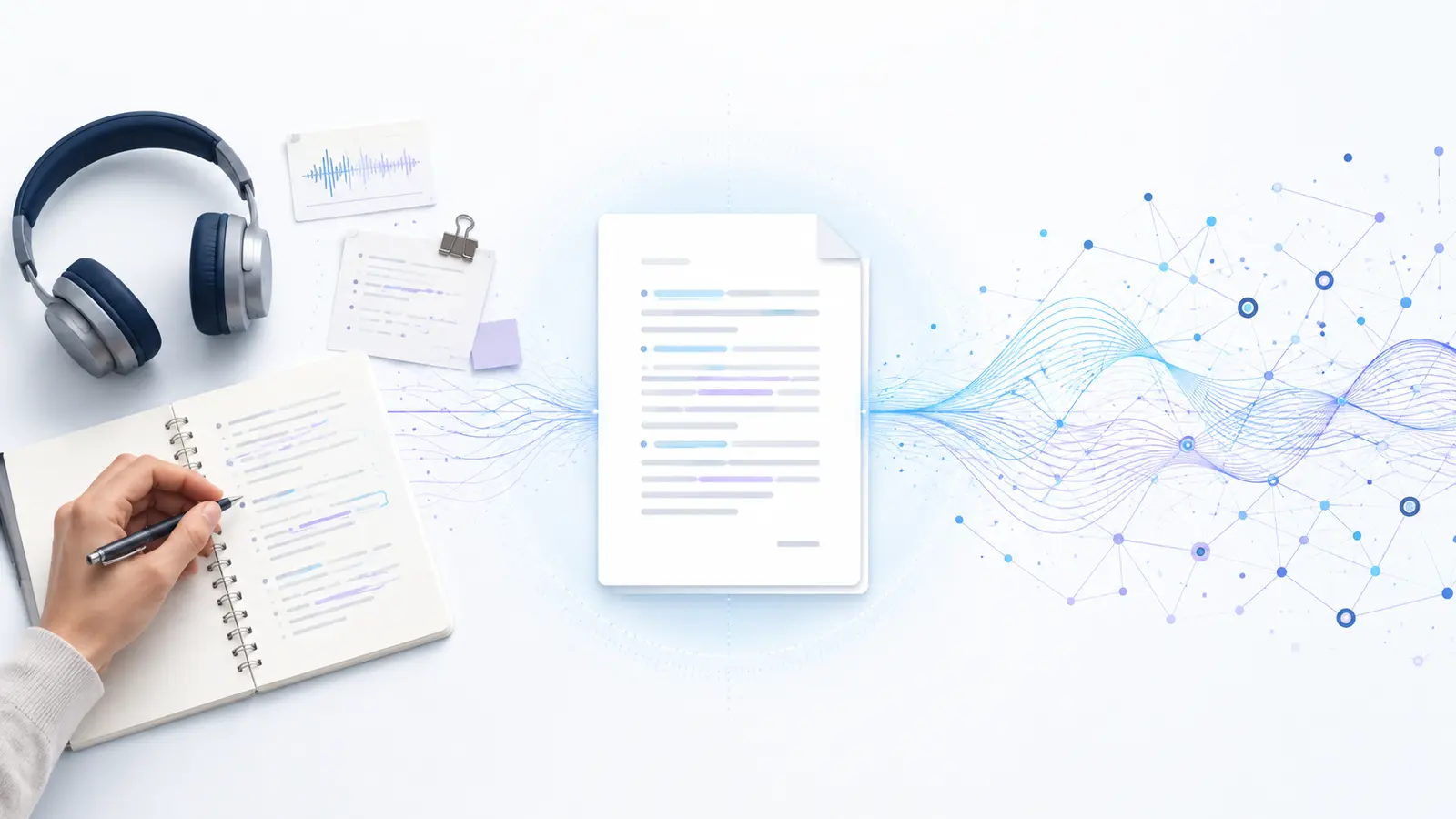
First, process a typical segment and assess quality on key entities. Then, get the full text, filter out sections with names, numbers, and unusual words, and verify them using timestamps. Only after fact-checking, move on to stylistic editing.
This order keeps the tasks separate: first, preserve the meaning, then enhance the form. If you start rewriting before verification, it's easy to make an erroneous phrase more convincing.
Workflow
-
Automatic Draft Get the full text and timestamps without manually typing the entire recording.
-
Meaning Verification Check names, numbers, dates, negations, terms, and commitments.
-
Form Editing Remove repetitions and adapt the verified text for the final task.
Content is confirmed first. Only then can the text be shortened, restructured, or smoothed out.
Practical Checklist
Before Starting Transcription
- Determine the cost of error.
- Agree on the degree of verbatim.
- Check data handling conditions.
- Test on a complex but typical segment.
- Separate fact-checking from literary editing.
How to Complete a Task in Transkribator
Open Transkribator, upload a ready audio or video file, or use a verified supported public link. After processing, review the full text, timestamps, and available AI summary, check critical segments, and download the TXT. The set of AI features depends on the plan, and 10 minutes are available for initial evaluation after registration.
-
Select a Typical Segment Choose a representative part of the recording, not the cleanest one.
-
Get Text and Timestamps Automation eliminates manual typing and creates a working draft.
-
Review Critical Sections Refer back to the original using timestamps to confirm the meaning.
-
Download and Edit Export as TXT and prepare the final material in your preferred tool.
Key Points
- Automation and editing address different parts of the task.
- The higher the cost of error, the deeper the human review.
- A hybrid process is usually more effective than extremes.
- First verify the meaning, then enhance the style.
Frequently Asked Questions
Does AI replace a transcriber?
It handles the mechanical stage well but doesn't eliminate the need for contextual review and editorial responsibility.
When is automatic text sufficient?
When the material is used as a personal draft and an individual error won't lead to serious consequences.
Can the service be evaluated by accuracy percentage?
Without a methodology and a set of test recordings, such a percentage says little. It's more useful to test with your own type of audio.
What should be checked first?
Names, numbers, dates, negations, terms, direct quotes, decisions, and commitments.